4月を迎え、桜の便りが届くと、ふと食べたくなるのが三色団子ですよね。
ピンク、白、緑のやさしいコントラストは、眺めているだけで心が弾む春の風物詩です。
今回は、意外と知らない三色団子のルーツや、あの三色に隠された「粋」な意味についてご紹介します。
目次
- 三色団子の始まりは「豊臣秀吉」のプロデュース?
- 三つの色が表す「季節の移ろい」と「遊び心」
- なぜ「ピンク・白・緑」の順番なの?
- 素材の味を楽しむ、シンプルで贅沢な味わい|実際に食べてみた!
- お家で作る三色団子のポイント
- まとめ
- April Sweets in Japan|Hanami Dango (Three-Color Dumplings)
- Did Toyotomi Hideyoshi Create Hanami Dango?
- The Meaning Behind the Three Colors
- Why Are They Arranged Pink, White, and Green?
- A Simple Yet Refined Taste|Trying Hanami Dango
- Making Hanami Dango at Home
- Conclusion
三色団子の始まりは「豊臣秀吉」のプロデュース?
三色団子の歴史は古く、今から400年以上前の安土桃山時代にまでさかのぼります。
そのきっかけとなったのは、1598年に豊臣秀吉が京都・醍醐寺で開催した盛大な宴「醍醐の花見」だという説が有力です。(諸説あります)
派手なことを好んだ秀吉は、それまでの定番だった醤油味の白い団子ではなく、女性たちも喜ぶような、見た目が華やかで甘いお団子を考案させたそうですよ。
この宴が、現代のように「お花見をしながら飲食を楽しむ」文化のルーツともされています。
三つの色が表す「季節の移ろい」と「遊び心」
三色団子の色には、日本の美しい四季や自然への祈りが込められています。
- ピンク(赤):春の象徴である「桜」や、新しい季節の始まりを告げる太陽を表します。
- 白:冬の名残である「雪」、あるいは春のお祝いに欠かせない「白酒」を表現しています。
- 緑:雪の下から芽吹く「新緑」や、生命力あふれる初夏の息吹を表します。
ここで面白いのが、三色団子には「秋」がないという点です。
これには江戸時代の団子屋さんのユーモアが隠されており、「秋がない」=「飽きない(食べ飽きない)」、そして商売が繁盛する「商い(あきない)」という言葉を掛けた、縁起の良いお菓子としても親しまれてきました。
なぜ「ピンク・白・緑」の順番なの?
三色団子をよく見ると、串の先から「ピンク→白→緑」の順に刺さっていることが一般的です。
これにも、風情ある二つの説があります。
- 桜の成長ストーリー:ピンクは「つぼみ」、白は「満開の花」、緑は「散った後の葉桜」を表し、一本の串で桜の移ろいを表現しているという説です。
- 大地の目覚め:ピンクは「空に輝く太陽」、白は「地上に残る雪」、緑は「雪の下で芽吹く若草」を表し、春が訪れる様子を描いているという説もあります。
一般的なのは2ですが、1の説も風情があります。
素材の味を楽しむ、シンプルで贅沢な味わい|実際に食べてみた!
三色団子の魅力は、その素朴な味わいにもあります。
上新粉などを使ったもちもちとした食感は、お餅本来の美味しさをダイレクトに感じさせてくれます。
中には、京都の老舗「仙太郎」のように、白いお団子の上に桜の花を添えたり、きな粉や抹茶を使ったりと、独自の趣向を凝らした三色団子もあります。
上から白、抹茶、きな粉の3色です。白いお団子には、ピンクの桜の花がのっています。
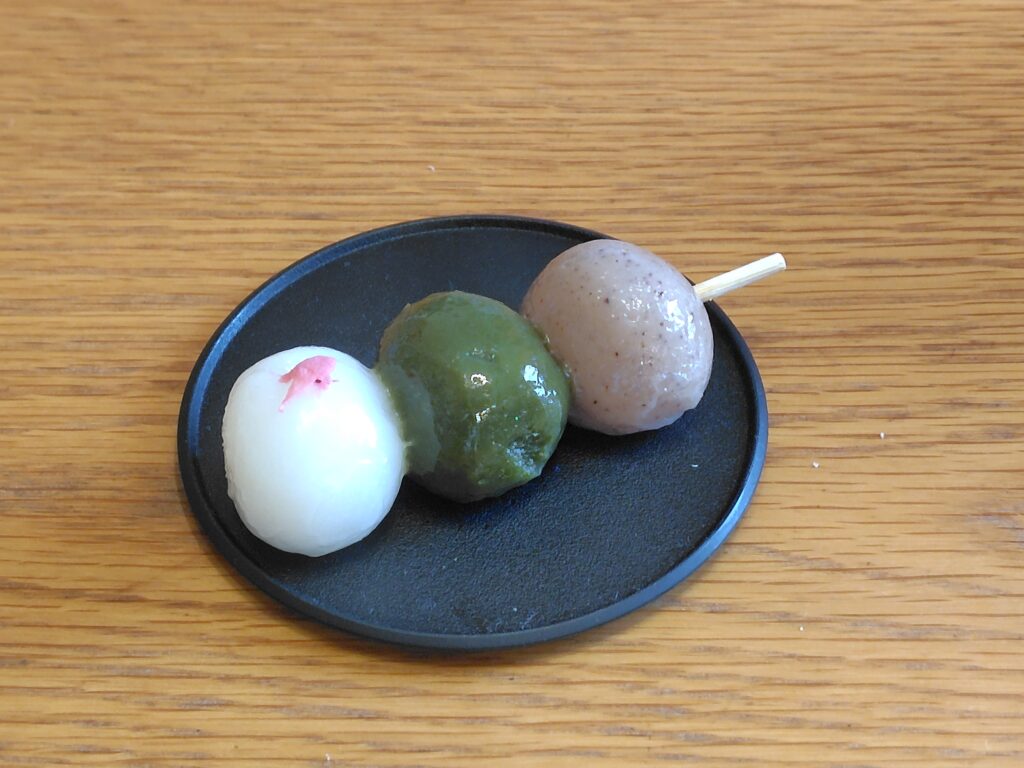
もちもちで、しっとりした生地。何個でも食べられてしまいそうなおいしさでした。
ちなみにこちらは、4月半ばまでの販売となっています。
食べてみたい方は、お早めに。
お家で作る三色団子のポイント
三色団子は、ご家庭でも比較的簡単に作れます。
三色団子の作り方(基本レシピ)
材料(約10本分)
- 白玉粉:150g
- 上新粉:150g
- 砂糖:大さじ2(お好みで調整)
- 水:180〜200ml
色付け用
- ピンク:食紅 少量
- 緑:抹茶 小さじ1(またはよもぎ粉)
- 白:そのまま
三色団子の作り方
ボウルに白玉粉+上新粉+砂糖を入れ、水を少しずつ加えながらこねます。
耳たぶくらいのやわらかさが目安です。
生地を3つに分けて、色をつけます。
・1つはそのまま(白)
・1つに食紅を混ぜてピンク
・1つに抹茶を混ぜて緑
※色はほんのりでOKです
それぞれを小さく丸めます
(直径2〜3cmくらい)
沸騰したお湯に入れて、
・浮いてきたらOK
・さらに1〜2分ゆでる
その後、冷水にとって冷やします
順番は基本これ👇
👉 ピンク → 白 → 緑
作り方のポイント
✔ 白玉粉だけでも作れるけど
→ 上新粉を混ぜると「だんご感」が出る
✔ やわらかさ調整が一番大事
→ 水は一気に入れない
✔ ゆでた後の冷水で
→ もちもち食感が決まる
さらに、上新粉に砂糖、そして絹豆腐を加えることで、時間が経っても固くなりにくい、耳たぶのような柔らかい食感に仕上がります。
まとめ
一本の串に、歴史と季節の移り変わり、そして遊び心を詰め込んだ三色団子。 スーパーの和菓子コーナーでも、よく売っていますよ。
次にお花見やティータイムで三色団子を手に取るときは、ぜひ秀吉の時代から続く物語に思いを馳せながら味わってみてください。
春のひとときが、いつもより少し豊かに感じられるかもしれません。
April Sweets in Japan|Hanami Dango (Three-Color Dumplings)
As April arrives and news of cherry blossoms begins to spread, many people in Japan find themselves craving hanami dango—the iconic three-color dumplings.
With their gentle contrast of pink, white, and green, they are a true symbol of spring, bringing joy simply by looking at them.
In this article, we’ll explore the origins of hanami dango and the refined meanings hidden behind these three beautiful colors.
Did Toyotomi Hideyoshi Create Hanami Dango?
The history of hanami dango dates back more than 400 years to the Azuchi–Momoyama period.
One popular theory traces its origin to the grand cherry blossom viewing party known as “Daigo no Hanami,” hosted by Toyotomi Hideyoshi in 1598 at Daigo-ji Temple in Kyoto (though there are several theories).
Hideyoshi, known for his love of extravagance, is said to have requested something more visually appealing than the traditional plain, soy-sauce-flavored white dumplings.
He wanted sweets that would delight guests—especially women—resulting in colorful, sweet dumplings.
This event is also considered one of the origins of today’s custom of enjoying food and drinks while viewing cherry blossoms.
The Meaning Behind the Three Colors
Each color of hanami dango reflects Japan’s deep appreciation for nature and the changing seasons.
- Pink (or red): Represents cherry blossoms and the sun that heralds the arrival of spring
- White: Symbolizes lingering winter snow or shirozake (a traditional celebratory sake)
- Green: Represents fresh greenery sprouting from beneath the snow and the vitality of early summer
Interestingly, there is no “autumn” color.
This absence reflects a playful Edo-period pun:
“no autumn” (aki ga nai) sounds like “never get tired of” (akinai), and also “prosperous business” (akinai).
Thus, hanami dango came to be seen as an auspicious sweet.
Why Are They Arranged Pink, White, and Green?
If you look closely, hanami dango are usually arranged in the order: pink → white → green.
There are two elegant interpretations behind this:
- The life of cherry blossoms: Pink represents buds, white represents full bloom, and green represents leaves after the petals fall
- The awakening of the earth: Pink symbolizes the sun, white the remaining snow, and green the young grass emerging beneath it
Each skewer tells a quiet story of seasonal transition.
A Simple Yet Refined Taste|Trying Hanami Dango
The charm of hanami dango lies in its simplicity.
Made from rice flour, its chewy texture allows you to fully appreciate the natural flavor of the ingredients.
Some traditional shops, such as Kyoto’s long-established Sentaro, offer creative variations—adding a cherry blossom on top of the white dumpling or using flavors like kinako (roasted soybean flour) and matcha.
In one variation, the three colors are white, matcha green, and kinako beige, with a delicate pink cherry blossom placed on top of the white dumpling.
Making Hanami Dango at Home
Hanami dango is surprisingly easy to make at home.
Basic Ingredients (about 10 skewers)
- Shiratamako (glutinous rice flour): 150g
- Joshinko (non-glutinous rice flour): 150g
- Sugar: 2 tablespoons (adjust to taste)
- Water: 180–200ml
For coloring:
- Pink: a small amount of food coloring
- Green: 1 teaspoon matcha (or yomogi powder)
- White: plain dough
Instructions
- Make the dough Mix the flours and sugar, then gradually add water and knead until soft (like an earlobe)
- Divide and color Split into three portions: plain (white), pink, and green
- Shape Roll into small balls (about 2–3 cm in diameter)
- Boil Cook in boiling water until they float, then boil for another 1–2 minutes Transfer to cold water to cool
- Skewer Arrange in the order: pink → white → green
Tips
- Adding joshinko gives a more authentic “dango” texture
- Add water gradually to control softness
- Cooling in water helps achieve the perfect chewy texture
You can also add sugar and silken tofu to the dough for a softer texture that stays tender even after time passes.
Conclusion
Hanami dango is more than just a sweet—it carries history, seasonal beauty, and a touch of playful spirit, all on a single skewer.
You can easily find it at supermarkets during spring.
Next time you enjoy hanami dango during cherry blossom viewing or tea time, take a moment to reflect on the story that has been passed down since the time of Hideyoshi.
It might make your spring moment feel just a little more special.